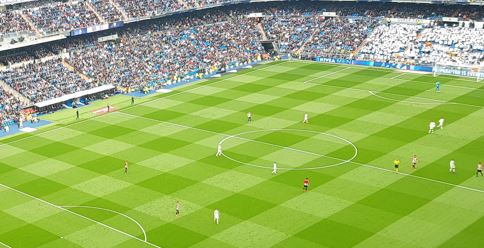
Monty Python’s Philosophers Football Match ‘Replay’: Ireland vs England in a World Cup of ideas?

For an Irish Times Unthinkable 2026 World Cup special, I ask who would line out in an Irish team for a renewed edition of the Philosopher Football Match? George Berkeley and John Toland are nailed-down starters but there’s a place for Roy Keane too…

Now imagine: “There are seconds left – the sides are deadlocked. Does a tree fall in the woods if no one sees it? Who knows, but VAR has spotted a hand ball in the English box. And it’s George Berkeley who is stepping up to take the penalty. ‘Esse est percipi,’ he says. ‘To be is to be perceived.’ Bentham – a notorious critic of human rights – tries to refute it. Already on the losing side of a key argument in moral philosophy, he dives the wrong way. And it’s a goal!

“More precisely, it either crossed the line, or it didn’t cross the line, and that’s good enough for referee Erwin Schrödinger.

“England captain AJ Ayer is protesting; he says the verification principle of logical positivism implies the final score is a pseudo-statement lacking empirical rigour. John Locke and John Stuart Mill are arguing about the proper limits of liberalism after conceding what was a soft penalty. And, in an outburst viewed as unsporting behaviour, an exasperated Bertrand Russell proclaims ‘the present King of France is bald’ and gets a red card.”

One doesn’t have to dream. Ireland has a winning tradition of philosophy. It deserves more recognition.

Read the full article here: https://www.irishtimes.com/opinion/2026/06/08/ireland-vs-england-in-philosophy-who-would-win-a-world-cup-of-ideas/

And a recommended team change from UCC’s Prof Vittorio Bufacchi: “… the absence of Jonathan Swift from the starting 11 is unforgivable. Swift’s contribution to the philosophical tradition of utopianism, immortalised in his masterpiece Gulliver’s Travels, cannot go unnoticed, especially this year, the 300th anniversary of its publication.

“Swift’s inclusion in the Irish team could be a gamechanger. As Kathleen Williams pointed out in her 1958 book Jonathan Swift and the Age of Compromise, Swift’s work is characterised by ‘the elusive brilliance of the attack … [but] the attack is also a defence’… take William Molyneux out and give the No. 10 shirt to Swift. A small change guaranteed to make a big difference.”

In Ireland, we’ll talk about anything except the meaning of life

For all the faults of the Catholic Church, it at least attempts to provide an answer to the ultimate question of life’s ‘purpose’

David Brooks signed off from The New York Times in January 2026 after 22 years as a columnist. He penned a thought-provoking, final piece on the “shredding of values” he has witnessed in America.

A deep source of regret for Brooks is the way education has become just another arm of the economy. “Multiple generations of students and their parents fled from the humanities and the liberal arts, driven by the belief that the prime purpose of education is to learn how to make money.” He cited recent Harvard research showing 58 per cent of college students say they experienced no sense of “purpose or meaning” in their life in the month before being polled.

“Loss of faith produces a belief in nothing,” Brooks writes. “I’m haunted by an observation that Albert Camus made about his Continent 75 years ago: The men of Europe ‘no longer believe in the things that exist in the world and in living man; the secret of Europe is that it no longer loves life’.”

Picking up on the theme, I wrote this piece for The Irish Times, arguing for a national conversation on values, or better still a national conversation on the meaning of life. Why are we here? Is there a purpose to our lives? In Ireland we’ll talk about anything except the most fundamental question of existence.

For all the faults of the Catholic Church, it at least attempts to provide an answer. Much of Irish society is too incurious, or too prejudiced against religion, to even enter the discussion.

My own submission is that we’re here to be human – and that means erring on the side of humanity. On hard cases, I humbly suggest we should lean into kindness.

Call it an article of faith. But some kind of faith may be necessary. As theologian Reinhold Niebuhr wrote: “Nothing which is true or beautiful or good makes complete sense in any immediate context of history; therefore we must be saved by faith.”

Full article here…

Are politics students getting too narrow an education?

Discussing the case fort teaching philosophy in schools – and planned reform of the Leaving Certificate Politics and Society curriculum – for the Irish Times Inside Politics podcast:

More than 15 years ago, a report of the National Council for Curriculum and Assessment (NCCA) identified “an existing gap in senior cycle education in the area of social and political sciences and in the area of philosophy”. Since then, the Leaving Certificate subject of politics and society has been introduced – it is 10 years old this year. But hopes of a philosophy course have been dashed.

Full article here…

Remembering Alasdair MacIntyre

The Gaelic philosopher who wrote ‘one of the most influential books of our time’

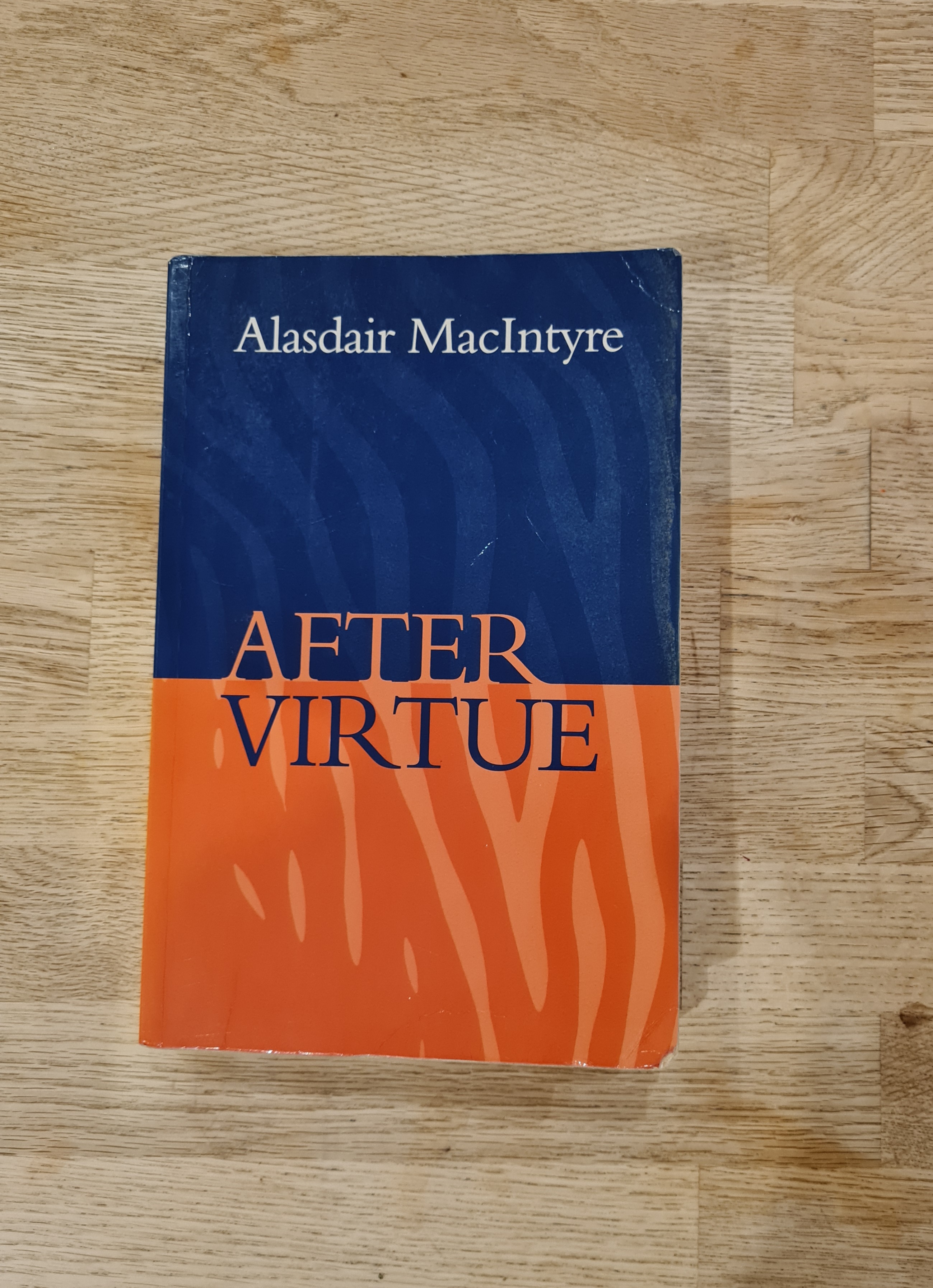
There are formative cultural experiences in all our lives. I’ll never forget hearing The Smiths for the first time, watching The Breakfast Club, and reading Alasdair MacIntyre’s After Virtue… Read more

And on a related theme…

  • Three things we give up when we turn away from Catholicism

Although I am now an avowed atheist, I’m not blind to the consolations religious belief can bring… Read more

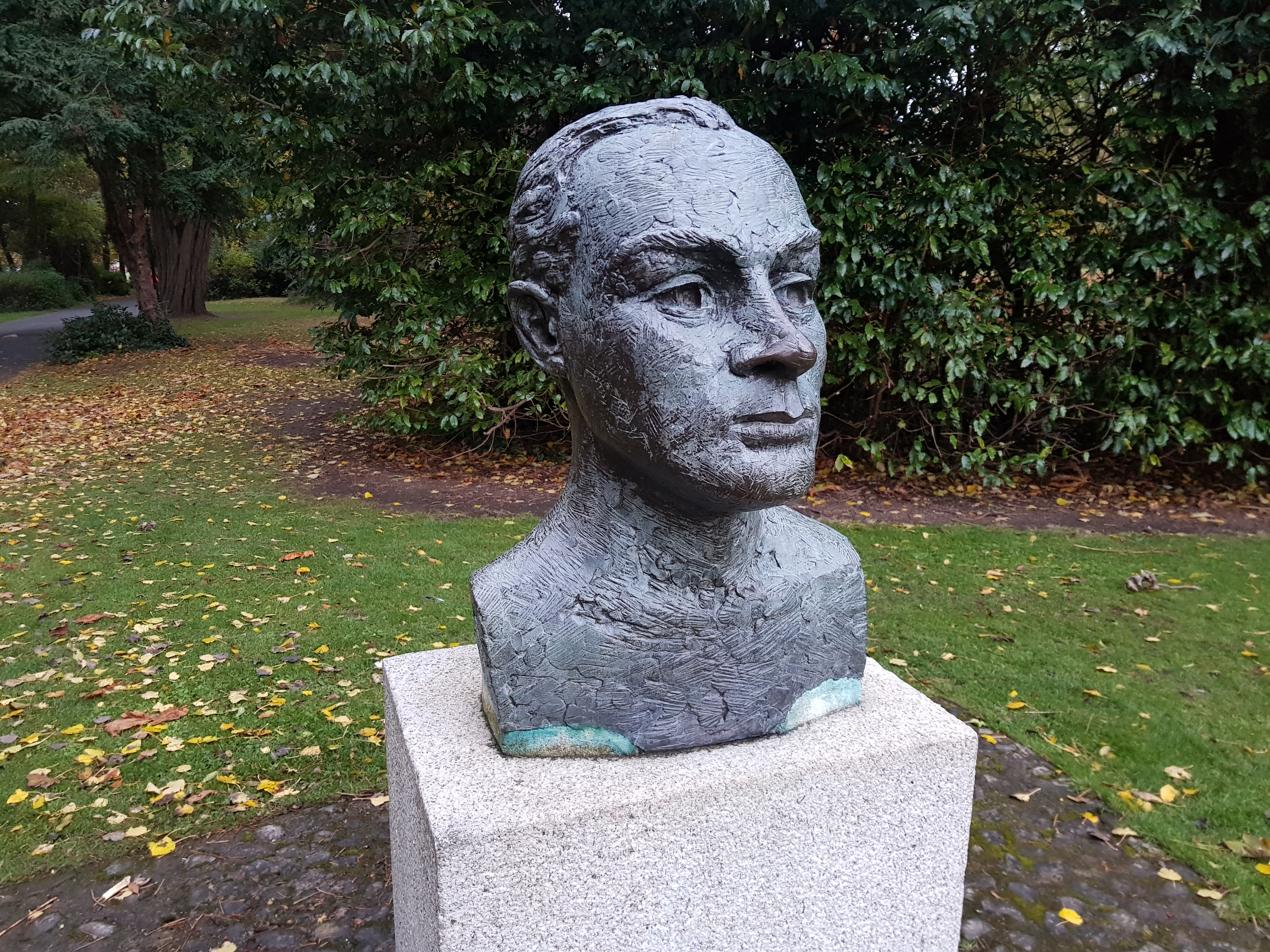
George Berkeley – Dysart Castle

Ireland could make an awful lot more of its rich philosophical heritage. Dysart Castle, near Thomastown, Co Kilkenny is the childhood home of George Berkeley (1685-1753). Today it’s a ruin, and in danger of collapse, according to conservationists. It is also difficult for any member of the public to see. The Nore Valley Walk from Thomastown to Inistioge takes you close by the castle but it wasn’t visible from the path due to the thick forest of trees bordering it. (One is tempted to re-frame his famous question: If a castle falls in the woods, and no one sees it, did it happen?)

Another site associated with Berkeley is St Paul’s Church on North King Street in Dublin where the philosopher was consecrated as bishop of Cloyne in 1734. Ken McCue, a heritage campaigner in north Dublin city who works with Sport Against Racism Ireland, has been lobbying for years for a plaque to be erected on the church, which now operates as an enterprise centre.

Since learning that Berkeley owned slaves while on missionary work in America, McCue is “in two minds” as to whether to keep pushing for the plaque but, having grown up in a Church of Ireland family in a predominately Catholic Republic he is conscious of the way sectarianism saw certain figures written out of Irish history. Noting how Protestant culture became less visible in inner city Dublin in his own lifetime, he says: “I used to call it a bloodless genocide.”

For more sites of philosophical interest in Ireland see: https://www.irishtimes.com/culture/short-of-staycation-ideas-try-a-pilgrimage-to-irish-philosophy-sites-1.4625625 Such sites of interest are being mapped by IrishPhilosophy.com at https://www.irishphilosophy.com/societies-clubs-summer-schools/

Euro 2020: Philosophical fandom

Schadenfreude is getting pleasure at the misfortune of others. The Buddhist concept of mudita, or “empathetic joy”, is “sharing in the happiness of others”. No prizes for guessing which feeling comes more naturally to humans.

A reflection on England’s defeat to Italy in the the Euro 2020 finals:

https://www.irishtimes.com/culture/euro-2020-how-irish-people-should-feel-philosophically-speaking-about-england-s-loss-1.4617933

Should admission to college be decided by lottery, not points?

It’s not every day you get to talk to a “rock star philosopher”! I was fortunate enough to be able to interview Michael Sandel about his latest book The Tyranny of Merit:

https://www.irishtimes.com/culture/books/why-admission-to-college-should-be-decided-by-lottery-not-points-1.4334075

The same issue is explored further with Carl Cullinane, head of research and policy at the UK Sutton Trust, Dr Peter Stone at Trinity College Dublin and Shane Bergin at UCD, in the context of the Leaving Cert:

https://www.irishtimes.com/culture/the-leaving-cert-is-not-fair-why-not-just-replace-it-with-a-lottery-1.4489707

Patrick Pearse, whose 1912 essay The Murder Machine addressed the topic of educating Irish schoolchildren. Statue on the grounds of St Enda’s, Rathfarnham, Dublin.

An earlier interview with Peter Stone on the same topic (without the paywall) can be found here:

https://www.irishtimes.com/culture/unthinkable-should-college-places-be-awarded-by-lottery-1.2364922

Five lessons of Stoicism: What I learned from living for a week as a Stoic

I took part in this year’s Stoic Week – getting up at sunrise like Marcus Aurelius who advised: “Say to yourself first thing in the morning: I shall meet with people who are meddling, ungrateful, violent, treacherous, envious, and unsociable. They are subject to these faults because of their ignorance of what is good and bad.”

Sandymount strand at sunrise.

A survey taken before the week and repeated after showed my life satisfaction rose by 42 per cent and flourishing by 11 per cent as positive feelings, as recorded by the questionnaire, conquered negative ones. I wrote about the experience here:

https://www.irishtimes.com/culture/five-lessons-of-stoicism-what-i-learned-from-living-for-a-week-as-a-stoic-1.4392422